If 2023 was the year of the Chatbot, and 2024 was the year of the Multimodal Assistant, 2026 has officially been christened the year of the Autonomous Agent. On February 5, 2026, the AI landscape shifted beneath our feet. We aren't just looking at a tool that writes funny limericks anymore; we are looking at a system designed to be a "Senior Architect."
Welcome to your ultimate Claude Opus 4.6 Beginner's Guide. Whether you are a business owner trying to automate workflows or a developer tired of fixing buggy code, this guide will walk you through why this model is different, how to use it without going broke, and why NASA trusted it to drive a nuclear-powered robot on Mars.
This isn't just about a smarter chatbot. It’s about a fundamental restructuring of how we work. Let’s dive in.
What is Claude Opus 4.6? (The "Adult in the Room")
To understand Opus 4.6, you have to stop thinking of it as a "text generator" and start thinking of it as "Cognitive Compute."
Anthropic, under the guidance of CTO Rahul Patil, didn't build this model to win a speed race. They built it to solve the "SaaSpocalypse"—the massive shift where companies are replacing specialized software subscriptions with generalized AI intelligence.
Opus 4.6 is positioned as the "Deep Thinker." While other models race to spit out tokens, Opus is designed to sit back, utilize its new Adaptive Thinking modules, and plan a strategy. It represents a move from Artificial Intelligence to Artificial Agency.
Key Specs at a Glance
- Release Date: February 5, 2026
- Context Window: 200,000 (Standard) to 1,000,000 Tokens (Beta)
- Specialty: High-reliability workflows, legacy code migration, and complex reasoning.
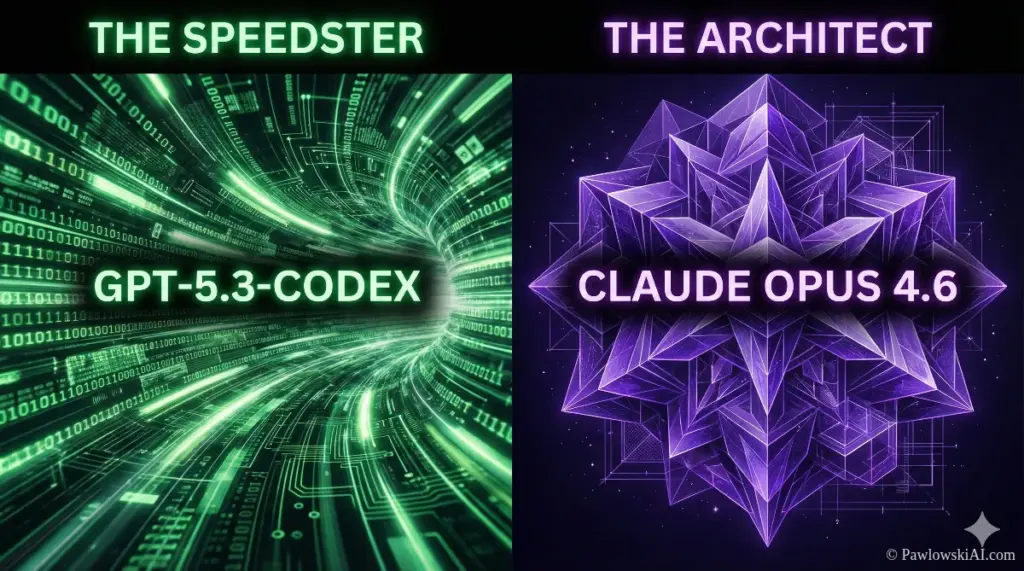
The "Architect" vs. The "Speedster": Comparing Giants
The most common question I get at our AI Masterclass is: "Should I use GPT-5.3 or Claude Opus 4.6?"
The answer depends entirely on your "vibe." The market has split into two distinct philosophies:
The Speedster: GPT-5.3 Codex
Imagine a brilliant, highly caffeinated junior developer who types at light speed. That’s GPT-5.3.
- Speed: ~245 tokens/second.
- Superpower: Live Repository Sync and instant "tab-complete" coding.
- The Catch: It suffers from "Hallucination by Speed." In complex logic tasks, it has a hallucination rate of 3.4%. It prioritizes being fast over being right.
The Architect: Claude Opus 4.6
Now, imagine a Senior Staff Engineer who drinks herbal tea, stares at the ceiling for five minutes, and then points out a critical flaw that would have crashed your production server in six months. That’s Opus 4.6.
- Speed: ~85-100 tokens/second (deliberately slower).
- Superpower: Adaptive Thinking. It deliberates before it acts.
- The Win: In a recent "Legacy Code Migration" test, Opus 4.6 achieved a 91% success rate compared to GPT-5.3's 78%.
Takeaway: If you need a quick script, use the Speedster. If you need to restructure a 150,000-line legacy codebase, you need the Architect.
Claude Opus 4.6 Beginner's Guide to the 1M Token Window
We've heard "large context window" claims before. Usually, they come with a hidden caveat: "Context Rot." As you fill the window, the model starts forgetting things in the middle.
Opus 4.6 claims to have solved this, and the benchmarks back it up.
The "Needle in a Haystack" Breakthrough
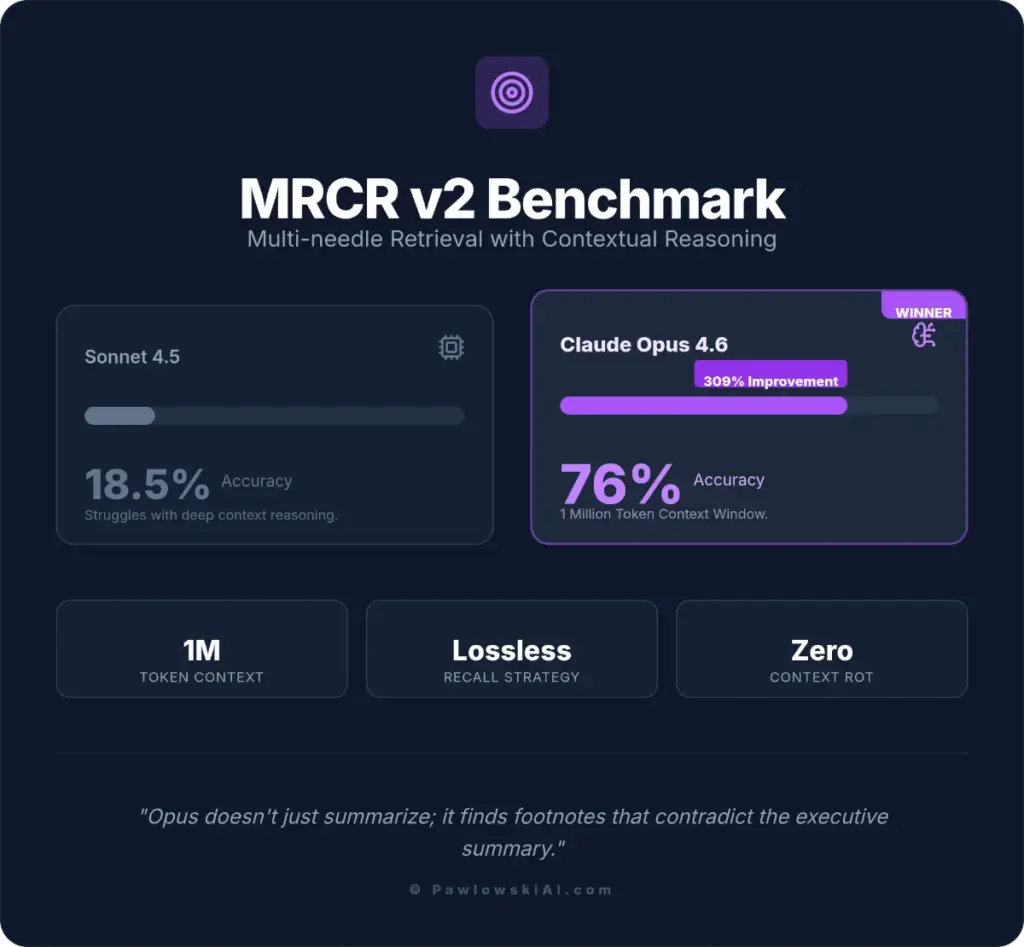
The gold standard for testing this is the MRCR v2 (Multi-needle Retrieval with Contextual Reasoning) benchmark. It’s not just about finding a word; it’s about finding a fact on page 10, connecting it to a contradiction on page 3,000, and explaining why they conflict.
- Claude Opus 4.6 Score: 76% accuracy on the 1 Million token variant.
- Sonnet 4.5 Score: 18.5%.
That is a 309% improvement. For industries like Legal and Finance, this is a game-changer. You can dump a 2,000-page legal discovery document into the chat, and Opus won't just summarize it—it will find the footnotes that contradict the executive summary.
Real-World Business Application
This "lossless" reasoning allows you to bypass complex RAG (Retrieval-Augmented Generation) setups for many use cases. Instead of chopping your data into tiny pieces, you just feed the whole beast.
Mastering "Adaptive Thinking"
One of the coolest features in this Claude Opus 4.6 Beginner's Guide is the ability to control how hard the AI thinks. This isn't just a toggle; it's a resource management decision.
Opus 4.6 uses "Thinking Tokens" to plan its answer before writing a single word of the final response.
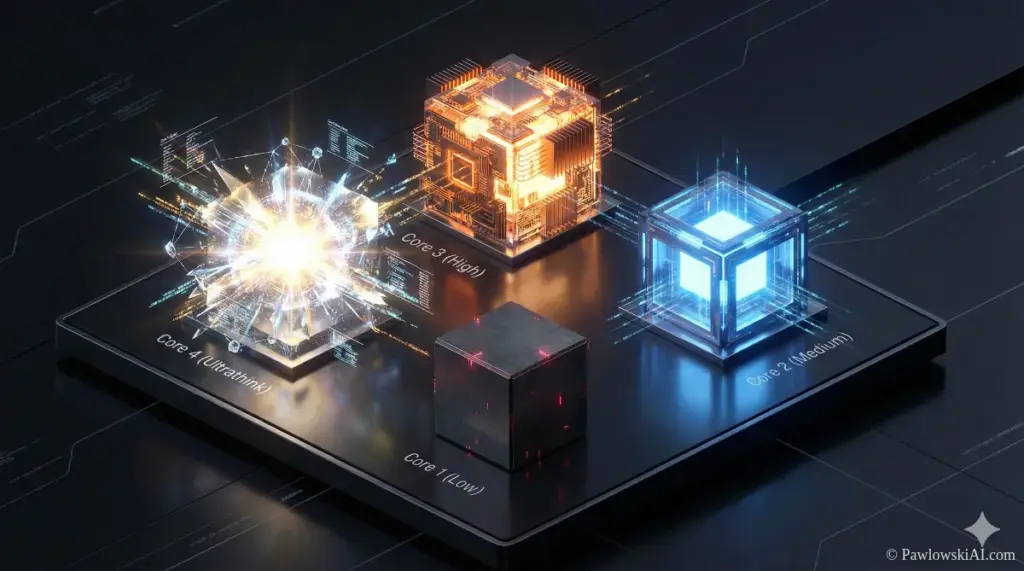
The 4 Modes of Thought
- Low Effort: Perfect for summaries and emails. Fast and cheap.
- Medium Effort: The sweet spot for standard content.
- High Effort (Default): For complex coding and reasoning.
- Max Effort / "Ultrathink": This is the nuclear option.
How to Trigger "Ultrathink"
You can actually force the model to use its maximum reasoning budget by using specific trigger words in your prompt, such as:
- "Ultrathink"
- "Think intensely"
- "Think super hard"
Warning: This mode is slow (60+ seconds) and burns tokens like crazy. Use it only for high-stakes tasks, like debugging a race condition or auditing a merger contract.
Agentic Workflows: The Rise of "Vibe Coding"
We are witnessing a cultural shift from "Prompt Engineering" to "Vibe Coding."
In the past, you had to write the code or at least understand the syntax to guide the AI. With Opus 4.6's Agent Teams, your role shifts to Product Manager. You define the "vibe" (the requirements and aesthetic), and the AI handles the implementation.
How Agent Teams Work
Inside the new Claude Code CLI tool, you don't just ask a question; you spin up a squad:
- The Lead Agent: Coordinates the project and breaks down tasks.
- The Researcher Agent: Browses the web for documentation (scoring #1 on the BrowseComp benchmark).
- The Coder Agent: Writes the script in an isolated environment.
These agents run in parallel. The Researcher might message the Coder: "Hey, that library is deprecated, use this one instead," and the Coder updates the script automatically. This is the "Patil Effect" in action—software features becoming commoditized by intelligence.
Pricing & "Cloud Bill Shock": A Warning
Here is the part where I have to be the responsible friend. While Anthropic markets Opus 4.6 as "cost-effective," there is a trap in the fine print.
The Pricing Tiers
- Standard (Up to 200k context): $5.00/million input, $25.00/million output.
- Premium (> 200k context): $10.00/million input, $37.50/million output.
The Trap: It is remarkably easy to accidentally cross that 200k threshold by uploading a few PDFs or a full codebase. Once you do, your input costs double.
The Fast Mode Premium
If you need speed for a customer service bot, you can enable "Fast Mode." But be warned: it costs 6x the standard price (though currently discounted to 3x until mid-February).
Strategic Advice: Do not use Fast Mode for batch processing. Only use it when a human is staring at a screen waiting for a reply.
Practical Tutorial: Your First Steps with Opus 4.6
Ready to get your hands dirty? Here is a mini-tutorial to move you from theory to practice.
1. Setting Up Desktop Integration
For Max plan users on macOS, Claude now runs in an isolated Virtual Machine (VM) on your desktop.
- Why a VM? Safety. If the agent "hallucinates" and tries to delete your hard drive, it only nukes the virtual drive.
- The Power Move: Give it permission to access your local "Downloads" folder. Ask it to: "Analyze the CSVs in Downloads, create a chart in Excel, and draft a summary in Word." It executes the workflow end-to-end.
2. The Context Compaction Hack
Building a long-running research agent? You need Context Compaction.
Set a threshold (e.g., 20k tokens). When the conversation hits this limit, Claude internally pauses and summarizes the first 10k tokens into a dense "Memory Block."
- Result: You get "infinite-length" conversations where the model remembers your name and the project goal but forgets the verbatim fluff of yesterday's chat.
Case Study: Claude on Mars (The Trust Factor)
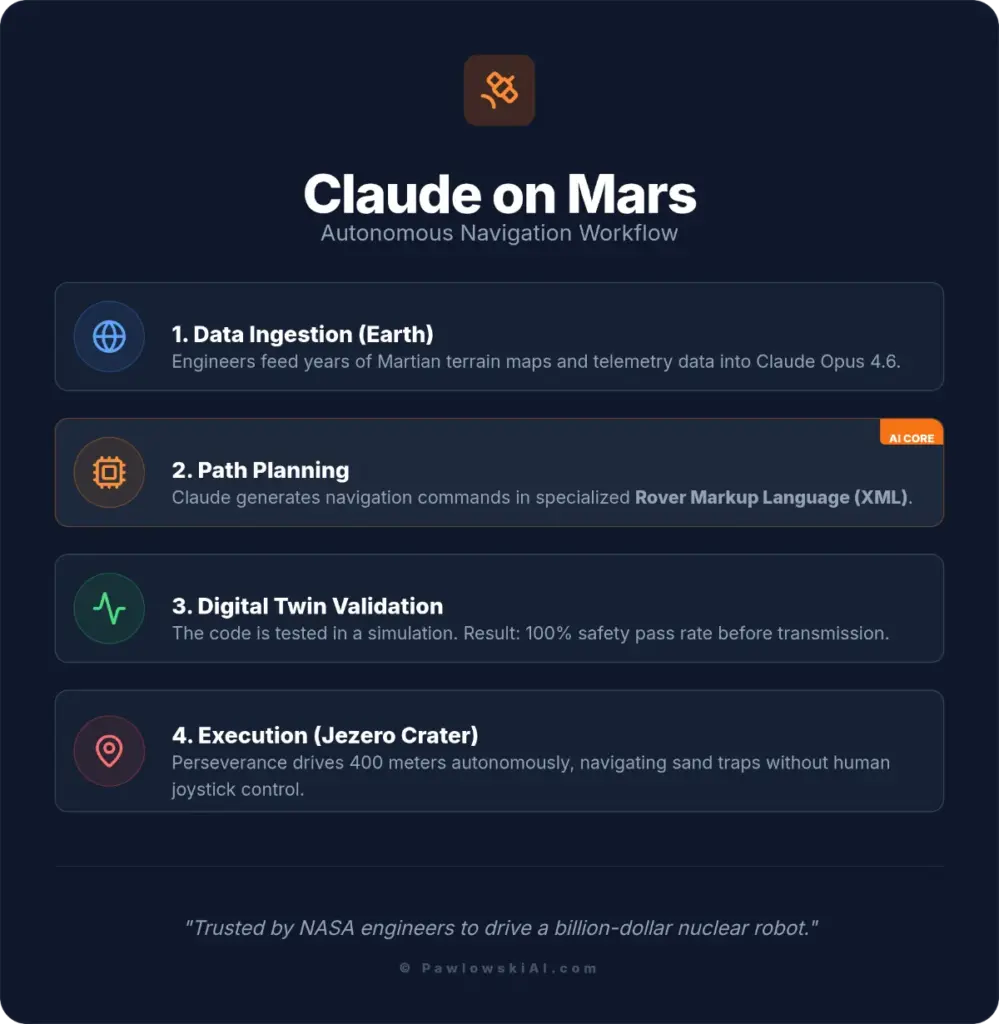
If you are still skeptical about relying on an AI agent, let’s look at the ultimate high-stakes environment: the surface of Mars.
On December 8 and 10, 2025 (Sols 1707 and 1709), NASA's Jet Propulsion Laboratory used Claude to plan navigation paths for the Perseverance Rover.
The Problem
Signal delay between Earth and Mars is ~20 minutes. You can't joystick the rover. If it hits a sand trap, it's game over.
The Solution
Engineers fed Claude years of terrain maps and data. Claude generated the navigation commands in Rover Markup Language (a specialized XML format).
- The Outcome: The code passed the "Digital Twin" simulation and successfully drove the rover 400 meters through Jezero Crater.
If NASA engineers—who are famously risk-averse—trust Claude Opus to drive a billion-dollar nuclear robot on another planet, you can probably trust it to categorize your support tickets.
Conclusion: Is Opus 4.6 Right for You?
The Claude Opus 4.6 Beginner's Guide boils down to this: Opus 4.6 is the model you use when the work is hard.
It isn't the flashy "Speedster" that generates code at the speed of light. It is the deliberate, thoughtful "Architect" that ensures your foundation is solid. Whether you are navigating a legacy codebase or the Jezero Crater, reliability is the new currency.
The era of the Chatbot is over. The era of the Coworker has begun.
Ready to master AI Agents?
If you want to go deeper than just reading about it, check out our AI Agents Without Programming course. We break down exactly how to build these "Agent Teams" without writing a single line of Python.